Meet The Plants | Rose
Strength in softness. True love and heartbreak. Beauty, mystery, celebration, even death. Few plants carry as much of the human story as the rose, and long before she became a symbol of romance, she was a plant of food and medicine. The wild rose, five simple petals and a crown of yellow stamens, is the grandmother of the tens of thousands of cultivated roses we know today.
Here you'll find:
- Meet Rose, Botanically Speaking
- In The Kitchen: Cooking with Rose
- The Medicinal Uses of Rose
- Precautions
-
Rose FAQ
- Try Our Rose Products
✿✿✿
Meet Rose, Botanically Speaking
Here's the quick rundown:
-
Latin name: Rosa spp.
-
Family: Rosaceae, a family the rose shares with apples, cherries, and raspberries
-
Age: Fossil evidence suggests roses may be as old as 35 million years
-
Wild vs. cultivated: True wild roses have exactly 5 petals and many yellow stamens, mostly in shades of pink, white, or red, with thorny, waxy stems and pinnate leaves. Over 30,000 cultivars have since been bred from that simple original for color, shape, and size.
-
The roses herbalists reach for: Fragrance is what separates a medicinal rose from an ornamental one. Old, richly scented varieties like Damask (R. damascena), Gallica (R. gallica), and dog rose (R. canina), a genuine wild species, are the ones generally most valued in herbalism and perfumery (for rose water and rose essential oil). Many modern roses are bred for color, shape, and bloom time at the expense of scent, which means less medicinal value.
-
The fruit: Once the flower fades, it matures into a hip, a small fruit packed with seeds and fine bristly hairs
-
Common names: Depending on where you are, wild rose also goes by pasture rose, prairie rose, dog rose, eglantine, sweetbriar, or scotch briar
- A little lore: Rose was said to be the favorite flower of Venus, the Roman goddess of love, beauty, and desire

In the Kitchen:
Cooking with Rose
Rose shows up in the kitchen in two ways: the rose hip and the petal, and each brings something different to the table.
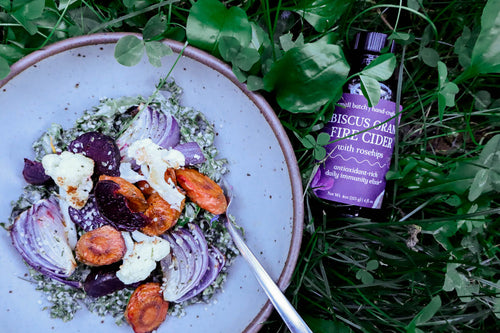
Rose hips are famous for their vitamin C content, much like hibiscus. Fresh off the bush, a rose hip can carry more vitamin C by weight than an orange, though that content fades quickly after picking and fades further with drying or heat. Even so, rose hips hold onto plenty of other beneficial phytonutrients, including anti-inflammatory antioxidants, which makes them worth reaching for beyond just the vitamin C.
Rose petals are mostly water, but they carry small amounts of vitamins C, A, and E along with a range of health-supporting phytochemicals like terpenes, flavonoids, and anthocyanins. Their real gift, though, is aromatic. That soft, floral scent does as much for a dish's mood as it does for its flavor.
Ways to enjoy rose in the kitchen:
- Rose hip tea, on its own or blended with other herbs
- Rose petal honey or vinegar infusions
- Rose hip syrups, vinegars, or jam
- Fresh or dried petals scattered over salads or desserts
- Rose water stirred into drinks or baked goods
- Rose petal tinctures or glycerites for a more concentrated preparation
→ Check out these recipes with rose:
Rosey Lemon Oatmeal Crumb Bars with Rose Honey
Chocolate Dipped Strawberries with Rose Honey Cashew Creme
✿✿✿
The Medicinal Uses of Rose
Rose is, first and foremost, a plant for matters of the heart, in every sense of the word. All roses carry medicinal qualities, but it's fragrance that determines potency.
Rose for Heart and Emotional Health
Rose has long been associated with the emotional heart, and there's a real physiology behind that association. Studies have found that simply smelling roses can lower blood pressure, slow the rate of breathing, and increase blood oxygenation. One study found that smelling rose oil before surgery reduced preoperative anxiety. Rose hip tea has also shown beneficial effects on blood pressure and cholesterol.
Herbalist also classify rose as a nervine, meaning it supports a healthy response to stress, which is part of why a cup of rose tea can feel just as calming as it is nourishing.
Rose for Pain and Inflammation
Rose is a gentle astringent, helping to tighten and tone inflamed tissues, and its high bioflavonoid and antioxidant content makes it a genuinely effective anti-inflammatory. Rose water, an infusion (tea) or distillation (hydrosol) of the petals, can be used as a soothing eye wash for inflamed or irritated eyes. Rose hips in particular have shown promise for osteoarthritis, rheumatoid arthritis, and inflammatory bowel disease, without the side effects that often come with standard anti-inflammatories. Rose petal tea has also long been used to ease diarrhea by helping to tone and soothe gastrointestinal tissue. That same anti-inflammatory, tension-easing quality makes rose tea a gently ally for menstrual cramps as well.
Rose for Wound Healing
Thanks to its astringency, antioxidant content, and mild antimicrobial properties, rose can help speed wound healing, whether the wound in question is internal or external.
Rose for Skin Health
Rose's antioxidant, anti-inflammatory, and astringent properties make it a genuinely useful herb for skin health beyond wound care. Its ability to tone and tighten tissue, paired with its role in protecting against everyday oxidative stress, is part of why rose so often shows up in skincare meant to support a more vibrant-looking complexion.
Rose for Sensuality
Rose has a long history as an herbal aphrodisiac, an herb of intimacy and desire. As a gentle pelvic decongestant, it's thought to help ease stagnation and bring warmth and movement to the pelvic region, which is part of why it's so often reached for as a mood-setting, body-warming herb.

Precautions
Rose is well-tolerated by most people and considered generally safe as both a food and a medicine. The biggest precaution isn't about the plant itself, but about sourcing: roses from a florist are almost always treated with pesticides and other chemicals unless specifically grown organically, and shouldn't be used in food or medicine.
If you're foraging your own, the more fragrant the rose, the more medicinal potency it tends to carry, wild or cultivated.
As always, talk with your healthcare provider before using any herbs in a therapeutic amount, especially if you're pregnant, nursing, or on medication.
✿✿✿
Rose FAQ
What's the difference between rose hips and rose petals?
Rose hips are the fruit left behind after the flower fades, prized for their vitamin C and anti-inflammatory phytonutrients. Rose petals are the flower itself, lighter in nutrients but rich in aromatic, mood-supporting phytochemicals. Both are edible and medicinal, just in different ways.
Can I make medicine with roses from a florist?
Not for food or medicine. Florist roses are almost always treated with chemicals unless labeled organic. Look for roses grown specifically for use in food or medicine, grow your own, or forage wild roses if you have the opportunity.
Are wild roses better than cultivated roses?
Not necessarily. Fragrance is what determines a rose's medicinal value. Some of the most prized roses in herbalism, like Damask and Gallica, are actually old cultivated varieties, while others like the dog rose are true wild species. Wild and cultivated roses can be used interchangeably, as long as the rose is strongly scented.
What are the benefits of drinking rose tea?
Rose tea, whether made from the hips or the petals, is prized for supporting heart health, easing inflammation, and calming the nervous system. Rose hip tea in particular has been shown to support healthy blood pressure and cholesterol levels.
✿✿✿
Try Rose in These Products
Charmed & Delighted Herbal Honey
Hawthorn berry, rose hips, rose petals, and a touch of ginger in raw honey. Blended to support your heart and lift your spirits. Built for stirring into tea, drizzling over toast, or eating straight off the spoon.

Support Group Herbal Tea
With a calming blend of hawthorn, rosemary, rose hips and petals, and other gentle botanicals, each cup delivers subtle sweet-tart fruit notes, a whisper of aromatic evergreen, and a comforting, grounding ritual for your day.

Don't Forget the Flowers Finishing Salt
Organic edible petals and nourishing unrefined mineral salt come together to add soft floral notes, a bright pop of color, and a moment of delight to whatever you’re eating or sipping.

Summer Nights Florafetti Edible Flowers
A rose-forward blend of dried edible flower confetti perfect for barefoot dinners, candlelit kitchens, or any moment that deserves to feel effortless, joyful, and even extraordinary.